

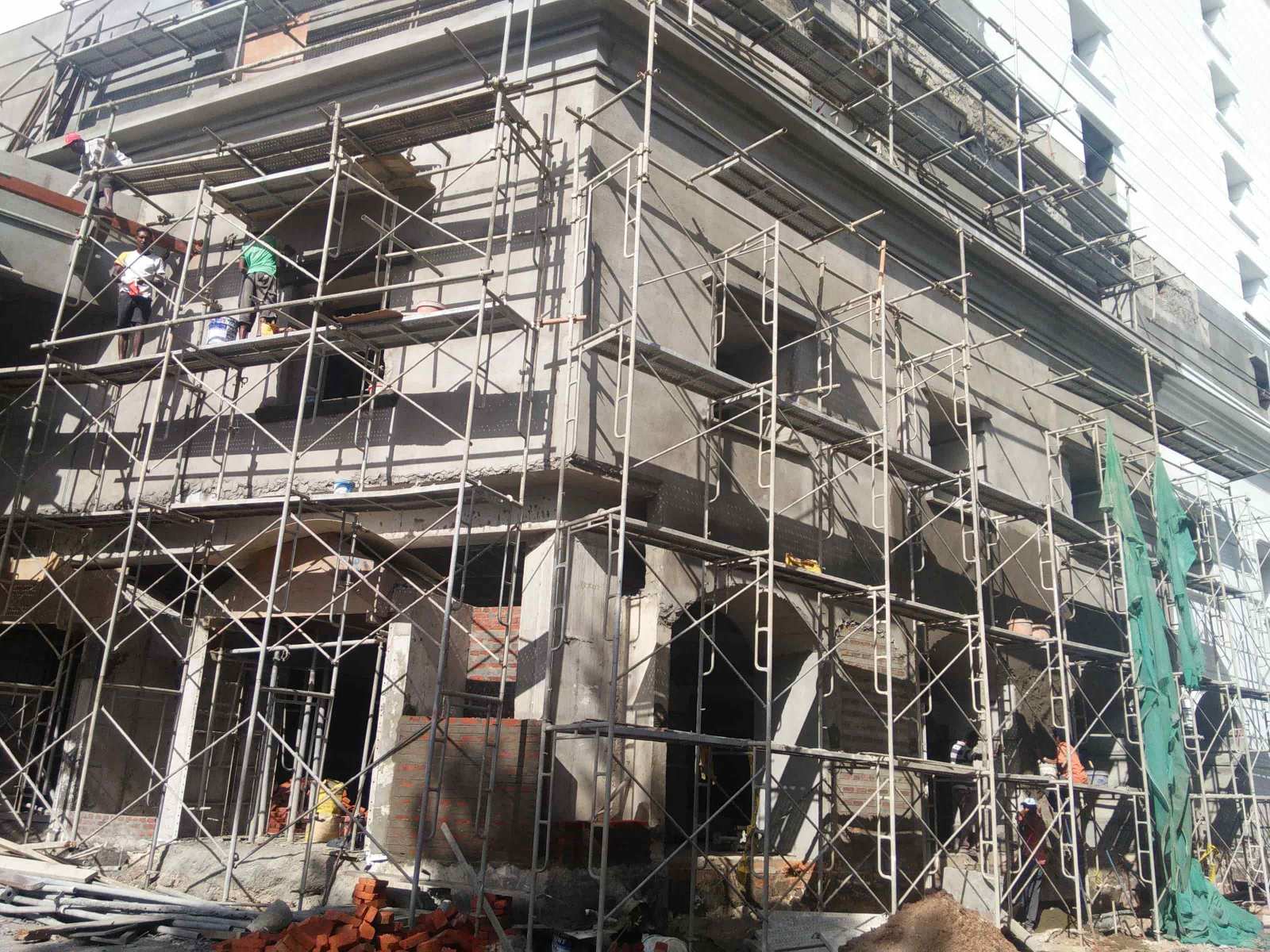
2.Location: External scaffolding is erected outside a building or structure, whereas internal scaffolding is set up inside a building or structure.
3.Access: External scaffolding is often used to access the exterior of a building for construction, maintenance, or renovation work. It provides workers with a safe platform to reach all levels and areas of the building. Conversely, internal scaffolding is used for work inside a building, such as ceiling repairs, painting, or installing fixtures. It allows workers to safely reach heights or work on multiple floors within the building.
4.Support: External scaffolding is usually supported by the building or structure it's attached to, using braces, ties, and anchors. Internal scaffolding may be freestanding or rely on support from the floor or walls within the building.
5.Safety Considerations: Both types of scaffolding require strict adherence to safety regulations and standards. However, due to the nature and potential risks of working at height, external scaffolding may involve additional safety measures such as guardrails, safety nets, or debris protection.
It's crucial to select the right type of scaffolding for your specific project requirements, taking into account factors such as access needs, location, structural design, and safety concerns. Consulting a professional scaffolding supplier can help ensure you choose the appropriate system for your project.
Post time: 2025-01-13 14:26:41