

1.Selection Determines Stability
The type of scaffolding should be chosen based on project requirements: traditional coupler-type scaffolding offers high flexibility but is time-consuming; cuplock scaffolding has strong load-bearing capacity and fast erection speed; portal scaffolding is suitable for low-rise operations. For high-rise buildings, it is recommended to use plug-in cuplock scaffolding, whose node torsion resistance is more than 3 times that of traditional steel pipes, and its modular design can reduce erection time by 30%.
2.Hidden Risks in Foundation Treatment
60% of scaffolding accidents stem from improper foundation treatment. For soft soil layers, a 15cm-thick concrete cushion must be poured first. The bottom of vertical poles must be equipped with adjustable bases and wooden planks with a thickness of ≥5cm. During rainy season construction, drainage ditches should be installed to prevent water accumulation from softening the foundation.
3.Protection of Key Nodes
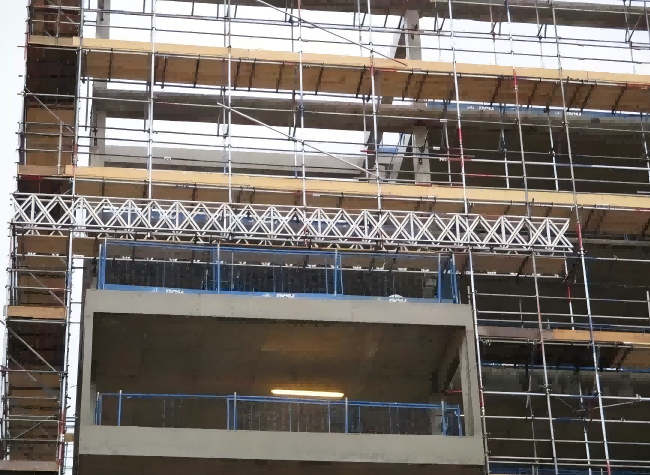
Wall-connecting members: When the height is ≤50m, they must be arranged at intervals of "two steps and three spans" and fixed with double couplers.
Scaffold planks: The gap at the joints of planks on the working layer should be controlled between 2-5cm, and the overhang length should be ≤15cm.
Access ladders: For floor-standing scaffolding over 24m, a zigzag ramp with a slope of ≤1:3 should be installed, and the spacing between anti-slip strips should be ≤30cm.
4.Key Points for Daily Inspection
Before daily operations, focus on checking: verticality deviation of vertical poles (≤1/200 of the scaffolding height), coupler torque (40-65N·m), and loosening of wall-connecting members. It is recommended to randomly check 20% of the couplers with a torque wrench; if more than 3 unqualified ones are found, a comprehensive inspection is required.
Post time: 2025-08-28 16:42:04