

1. Easy to assemble and disassemble: Portal scaffolding is designed in such a way that it can be assembled and disassembled quickly and effortlessly, which reduces the risk of accidents during the installation and dismantling processes.
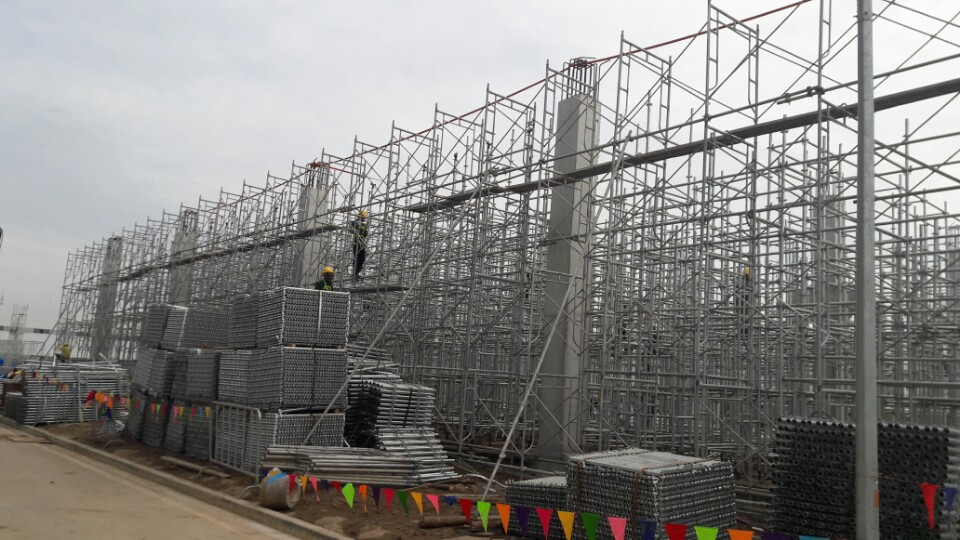
2. Structural integrity: Portal scaffolding, also known as modular scaffolding, is engineered to be sturdier than traditional scaffolding. Its interlocking components offer better stability and greater resistance to wind and other external forces, thus reducing the risk of collapse.
3. Better edge protection: Portal scaffolding often comes with built-in guardrails and toeboards, which enhance edge protection and prevent workers from falling off the scaffold.
4. Improved worker mobility: Portal scaffolding systems generally have wider platforms and better access systems, enabling workers to move around more freely and efficiently within the structure.
5. Regular inspections: Since portal scaffolding is modular and designed for easy assembly, it is easier to inspect and maintain the structure to ensure its safety and integrity.
6. Reduce material handling: The components of portal scaffolding are usually pre-fabricated and delivered to the construction site ready for assembly, reducing the need for on-site welding and cutting that can pose safety risks.
In conclusion, portal scaffolding has superior safety features compared to traditional scaffolding due to its structural integrity, edge protection, ease of assembly and disassembly, improved worker mobility, reduced material handling, and facilitation of regular inspections. However, when using any type of scaffolding, it is essential to ensure that all safety protocols and regulations are followed to guarantee the safety of workers and bystanders.
Post time: 2025-01-22 17:33:43