

1.Worker Qualification Requirements: Scaffolding workers must hold a special operations certificate to ensure safe operations.
2.Special Safety Construction Plan: Scaffolding construction is classified as a high-risk sub-project, requiring a dedicated safety construction plan. For high-formwork projects exceeding a certain scale, expert review of the plan must be conducted.
3.Safety Harness Usage Standards: Safety harnesses must follow the principle of "anchoring high, using low" to ensure operational safety.
II. Material Requirements for Scaffolding
1.Steel Pipe Specifications: Steel pipes of Φ48.3mm*3.6mm should be used, with a maximum single weight not exceeding 25.8 kg. Anti-rust paint must be applied before use.
2.Coupler Standards: Couplers must comply with national standards and undergo anti-rust treatment.
III. Safety Net Requirements for Scaffolding
1.Safety Net Specifications: Close-mesh safety nets and horizontal safety nets must meet relevant standards. The density of close-mesh safety nets should not be less than 2000 meshes per 100 cm².
2.Testing Equipment: A torque wrench must be used to check tightening torque.
IV. Basic Requirements for Ground-Supported Scaffolding Erection
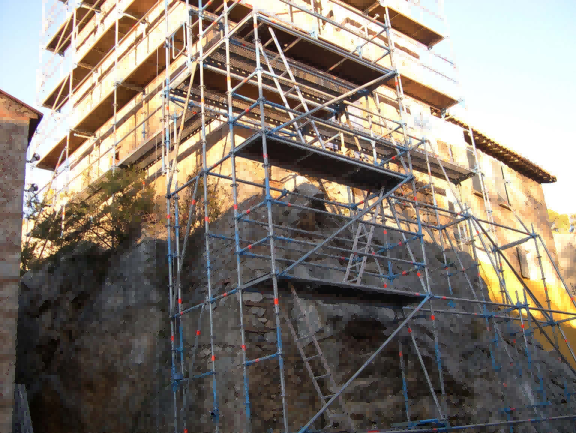
1.Upright Post Erection: During initial setup, temporary diagonal braces should be installed every 6 spans until permanent wall ties are securely fixed. The angle of these braces should be between 45° and 60°, and their distance from the main node should not exceed 300 mm.
2.Kickboard Installation: Scaffolds must have both longitudinal and transverse kickboards. The longitudinal kickboard should be fixed to the upright post no more than 200 mm from the base using right-angle couplers, while the transverse kickboard should be fixed to the upright post just below the longitudinal kickboard.
By following these guidelines, relevant personnel can better understand and implement scaffolding safety management requirements, ensuring "safety first" in actual construction.
Post time: 2025-08-19 09:35:19