


1.Failure to erect scaffolding strictly according to the construction plan (technical disclosure);
2.Inadequate inspection and acceptance of scaffolding.
These hazards mainly exist during the construction preparation stage and involve human factors, material factors, environmental factors, and management reasons.
II. Human Factors
1.Operators working without certificates or with expired certificates;
2.Operators not receiving relevant safety education training and safety technical disclosure before starting work;
3.Operators not using safety protection equipment correctly, or the safety protection equipment lacking qualified inspection reports or being in an ineffective state;
4.Assigning personnel unsuitable for high-altitude work (such as those with hypertension, heart disease, acrophobia, or poor eyesight) to perform scaffolding erection and dismantling tasks at heights.
III. Material Factors
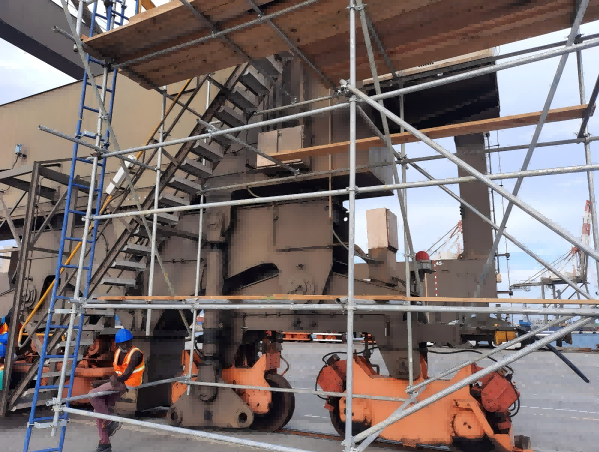
Mainly manifested as scaffolding erection not complying with standard requirements:
Firstly, excessive deviations in the transverse, longitudinal, and step distances of scaffolding, and irregular protection of the working layer;
Secondly, irregular installation of diagonal bracing and tie members;
Thirdly, inadequate safety protection measures, with safety nets and horizontal nets not securely installed;
Fourthly, irregular erection of cantilevered scaffolding.
Additionally, some scaffolding uses inferior materials with insufficient stiffness, and no acceptance inspection was conducted before use, ultimately leading to accidents.
IV. Environmental Factors
1.Performing scaffolding installation and dismantling work during Level 6 or stronger winds, thunderstorms, heavy fog, snowfall, or at night;
2.Failing to set up warning zones below during scaffolding installation and dismantling, allowing pedestrian passage.
V. Management Factors
1.Incomprehensive scaffolding erection and dismantling plans, and lack of targeted safety technical disclosure: absence of on-site construction plans, or plans not tailored to the actual conditions of the construction site, merely copying standards to cope with inspections; inadequate safety technical disclosure, lacking specificity.
2.Inadequate safety inspections, failing to identify potential hazards in time: project managers, dedicated safety officers, team leaders, and construction workers at the site failed to identify issues during various safety inspections, or did not promptly rectify problems after discovery, ultimately leading to accidents.
Post time: 2025-10-29 10:35:33