

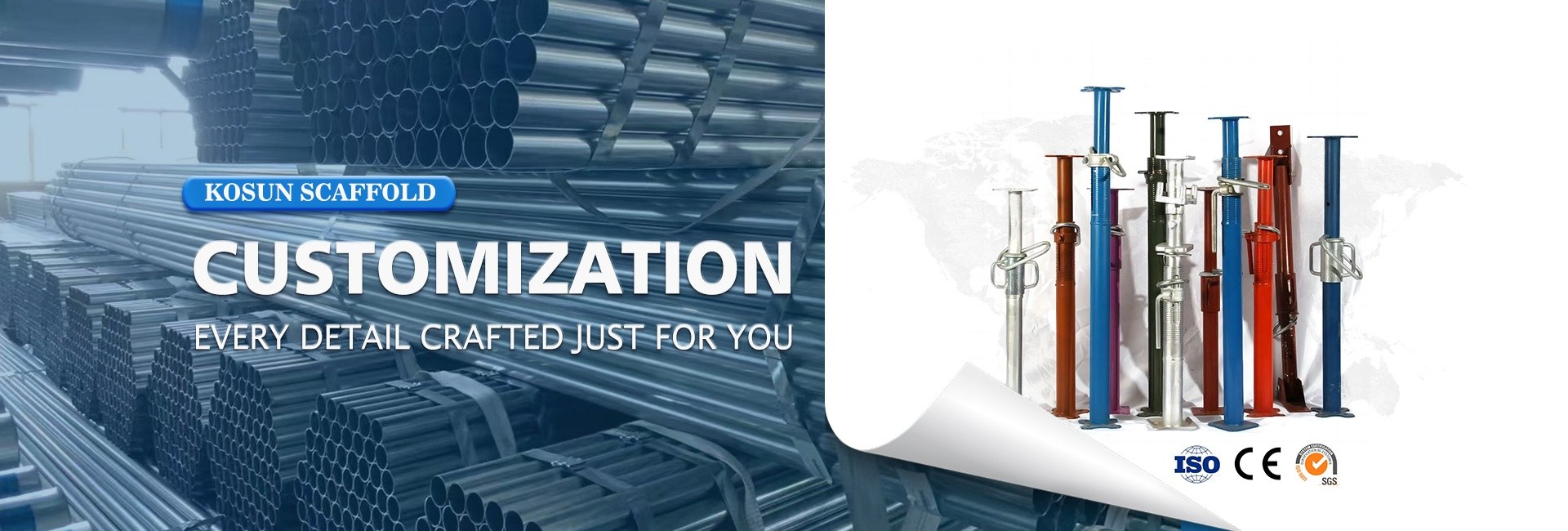
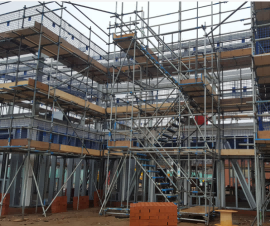
Scaffolding refers to a temporary structure that provides a working platform and support for construction workers to perform high-altitude operations or building repairs. According to different construction materials, scaffolding can be divided into steel pipe scaffolding, coupler-type scaffolding, and wooden scaffolding.
Steel pipe scaffolding: A support system formed by connecting vertical poles, horizontal, and diagonal rods with steel pipes and fixing them with couplers. It features stable structure and strong load-bearing capacity, and is widely used in various large-scale construction projects.
Coupler-type scaffolding: Vertical poles, horizontal, and diagonal rods are assembled using steel pipes and couplers. It is characterized by simple and quick assembly and a wide range of applications.
II. Installation of Scaffolding
Adequate preparations are required before building scaffolding: First, determine the type and specifications of the scaffolding and design it according to the specific conditions of the construction site; Second, pay attention to the safety of operators during construction, such as wearing safety helmets and safety ropes. The construction should be carried out in strict accordance with the design drawings and construction plans. Specialized equipment is required for the erection and dismantling of steel pipe scaffolding. During the assembly process, check the connectors to ensure they meet the standards.
III. Use of Scaffolding
When using scaffolding, it must be operated in strict accordance with the specifications:
First, check whether the scaffolding is stable and reliable, and take anti-slip measures to prevent slipping;
Wear safety belts and maintain body balance during high-altitude operations;
When it is necessary to move or adjust the scaffolding, high-altitude operations must be stopped, and corresponding measures must be taken to ensure the safety of personnel and equipment.
IV. Maintenance of Scaffolding
To ensure the safe use of scaffolding, regular maintenance and inspection are required: Pay attention to the wear of the scaffolding during use, and promptly replace or repair worn parts; Regularly inspect the scaffolding, including whether the connectors are tightened and whether the load-bearing components are deformed. If problems are found, measures must be taken immediately to deal with them.
V. Safety Issues of Scaffolding
The following safety issues are common when using scaffolding:
1.Poor stability of scaffolding: Due to non-standard construction or loose connectors, the stability of the scaffolding may be insufficient;
2.Unobstructed passages: The circulation paths for personnel and materials are not considered during construction, resulting in blocked routes;
3.Improper operation: Operators' improper operation of scaffolding or lack of professional training may easily lead to accidents;
4.Poor quality of scaffolding materials: Inferior materials may lead to insufficient load-bearing capacity or vulnerability to external damage.
The above four points are common safety issues in the use of scaffolding. Special attention should be paid during actual use, and corresponding measures should be taken for prevention and treatment.
VI. Summary
Scaffolding is an indispensable equipment in construction projects, but there are certain potential safety hazards during its use. To ensure the safety of construction workers, it is necessary to strictly control the construction, use, and maintenance of scaffolding, and at the same time strengthen personnel training and management. Only in this way can the safe use of scaffolding be ensured, providing a solid guarantee for the smooth progress of construction projects.
Post time: 2025-08-11 14:57:43