

1.Safety Protection Function: Scaffolding must meet usage requirements and have sufficient safety protection functions.
2.Bearing Capacity Design: Scaffolding should comply with the design requirements for bearing capacity to ensure structural stability and safety.
3.No Deformation: Scaffolding must not undergo deformation that affects normal use and should maintain structural integrity.
4.No Structural Damage: Scaffolding attached to or supported by building structures must not cause damage to the structures.
II. Calculation Conditions and Requirements for Scaffolding
1.Calculation Conditions: The most unfavorable sections and most unfavorable working conditions shall be taken as the basis for calculation.
2.Requirements for Strength, Stiffness, and Stability: The calculation results must meet the requirements for strength, stiffness, and stability.
III. Requirements for Selecting Scaffold Calculation Units
1.Select the members and components with the maximum force.
2.Select the members and components with the maximum force within the range of concentrated loads.
3.Select the members and components where the span, spacing, geometric shape, and force characteristics change.
4.Select the members and components at the positions where the frame structure changes or at weak parts.
IV. Methods for Setting Scaffold Cross Bracing
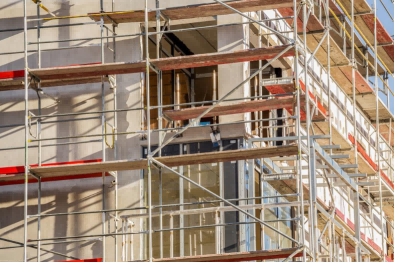
1.Uniform and Symmetric: The setting of cross bracing should be uniform and symmetric to ensure the stability of the frame.
2.Width and Inclination Angle: The width of each vertical cross brace is 6-9 meters, and the inclination angle of the cross brace diagonal rods should be maintained between 45° and 60°.
Post time: 2025-08-12 14:26:55