

1.On-site Safety Inspection
a. Site Flatness: Ensure the construction site is flat and free of debris to prevent the scaffolding from tilting or collapsing due to uneven ground during erection.
b. Peripheral Safety Distance: Set a safety distance around the construction site to prevent personnel, vehicles, and other objects from entering the construction area and causing safety accidents.
c. Protection of Underground Pipelines: Understand the distribution of underground pipelines at the construction site to avoid damage to underground pipelines during scaffolding construction, which may lead to leaks, power outages, or other accidents.
2.Quality Inspection of Construction Materials
a. Quality of Steel Pipes and Couplers: Verify the quality certification documents of construction materials such as steel pipes and couplers to ensure they meet relevant standards. The use of inferior materials is strictly prohibited.
b. Quality of Safety Nets and Scaffold Planks: Inspect the quality of protective facilities such as safety nets and scaffold planks to ensure they can withstand the impact forces that may occur during use and prevent personnel from falling.
3.Qualification Verification of Construction Personnel
a. Work with Certificates: Construction personnel must hold relevant special operation certificates. Working without certificates is strictly prohibited.
b. Safety Training: Provide safety training to construction personnel to enhance their safety awareness and ensure they comply with safety operating procedures during construction.
II. Safety Measures During Scaffolding Construction
1.Correctly Wear Safety Protective Equipment
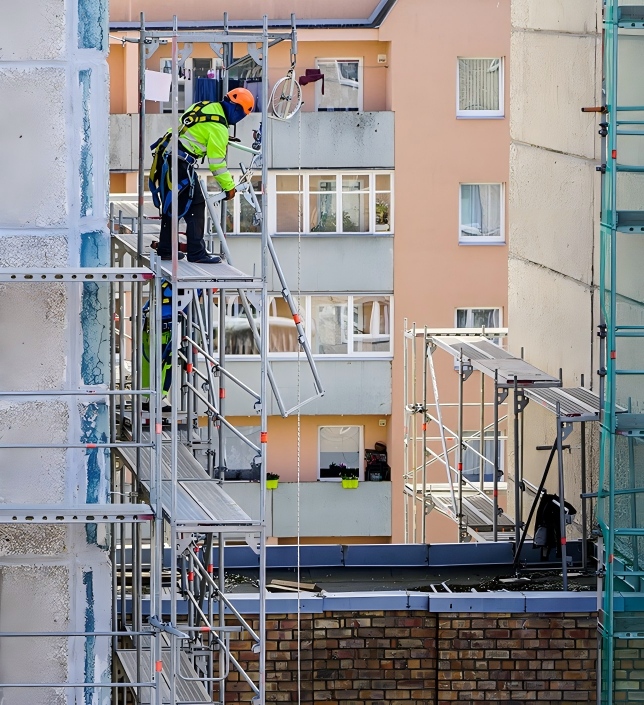
a. Safety Helmets: Wear standard-compliant safety helmets and ensure the chin straps are fastened to protect the head from injuries.
b. Safety Harnesses: Wear full-body safety harnesses when working at height and use safety ropes correctly to prevent falls.
c. Protective Shoes: Wear non-slip and puncture-resistant protective shoes to ensure foot safety.
d. Protective Gloves: Wear protective gloves as needed to avoid hand injuries.
2.Comply with Construction Operating Procedures
a. Conduct construction in strict accordance with operating procedures; illegal operations are prohibited.
b. Before construction, inspect whether scaffolding materials, fasteners, and other components meet requirements; the use of inferior materials is strictly prohibited.
c. Construction must be carried out in accordance with design requirements; unauthorized modifications are not allowed.
d. After construction is completed, conduct inspection and acceptance to ensure compliance with safe use requirements.
III. Ensure Stable and Reliable Construction Structure
a. The scaffolding foundation should be flat and solid to avoid uneven settlement.
b. Reinforcement measures such as diagonal braces and lateral braces should be installed on the scaffolding to improve overall stability.
c. Components such as scaffolding vertical poles and horizontal poles should be firmly connected, and fasteners must be tightened.
d. During the service period, conduct regular inspection and maintenance of the scaffolding to promptly eliminate potential safety hazards.
Post time: 2025-11-18 11:26:51