

1. Material Aspect
Ringlock scaffolding is the only type of scaffolding that can meet the Q345 material standard, and its strength is 1.5 to 2 times higher than that of other scaffolding types.
2. Safety Aspect
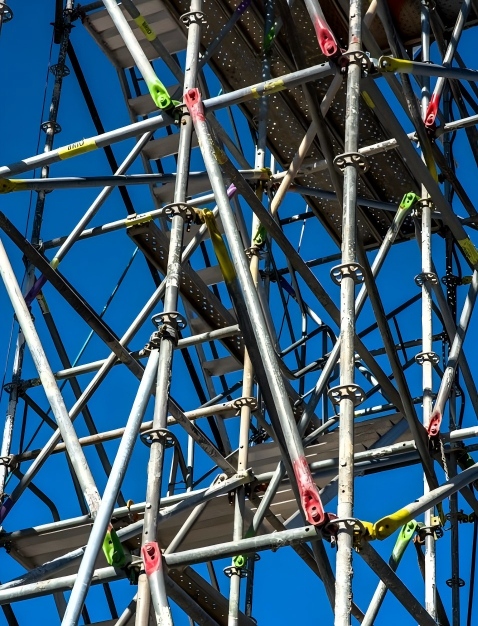
Compared with other scaffolding types, ringlock scaffolding is equipped with additional diagonal rods, which effectively enhance the stability of the scaffold structure and ensure a high safety factor.
3. Surface Treatment Aspect
The surface of ringlock scaffolding adopts a hot-dip galvanizing process, which can provide comprehensive protection for the scaffold structure, prevent rusting, and effectively extend its service life. Due to the upgraded material and galvanized surface, the price of ringlock scaffolding is naturally higher.
4. Load-Bearing Capacity Aspect
Taking the 60-series heavy-duty support frame as an example, the allowable load-bearing capacity of a single vertical pole with a height of 5 meters is 9.5 tons (with a safety factor of 2), and the breaking load reaches 19 tons—2 to 3 times that of traditional products.
In terms of cost saving, the spacing of vertical poles for ringlock scaffolding is generally 1.5 meters and 1.8 meters, the step distance of horizontal poles is 1.5 meters, the maximum spacing can reach 3 meters, and the maximum step distance can reach 2 meters. Therefore, compared with traditional products, the material consumption for the same support volume is reduced by 1/2, and the weight is reduced by 1/2 to 1/3.
The price of ringlock scaffolding is almost twice that of coupler-type steel pipe scaffolding. Although the price is higher, as long as a safe, reliable, and trustworthy equipment rental company is selected, the cost-effectiveness advantage of ringlock scaffolding can be fully exerted.
Post time: 2025-12-26 11:43:50