

2.Workers involved in the assembly and dismantling of scaffolding must undergo specialized training and hold valid certifications.
3.Materials, couplers, and standardized components used in scaffolding must comply with nationally mandated quality standards. All items must be inspected and approved before use; any that do not meet requirements are strictly prohibited.
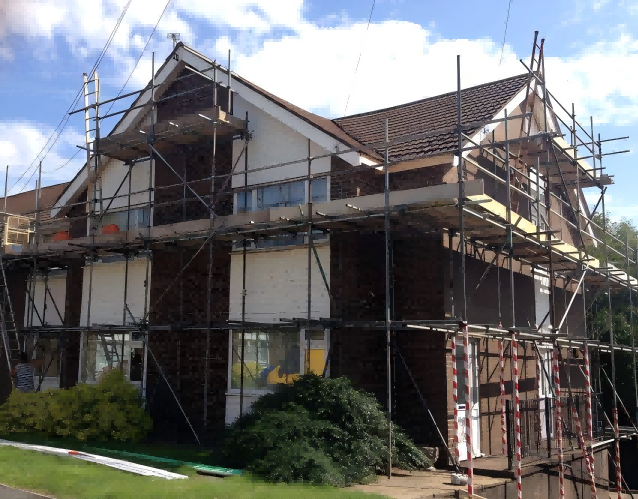
4.The scaffolding structure must be erected in accordance with nationally specified standards and design requirements. Cross bracing must be installed as specified, and the structure must be anchored to the building to maintain vertical alignment and overall stability. Guardrails, vertical nets, and horizontal nets must be installed as required. Planks must be laid tightly, with no overhanging or gap-filled boards permitted.
5.Scaffolding must be inspected and approved in stages during assembly to ensure it meets quality and safety standards. Regular and unscheduled inspections must be conducted during construction (especially after strong winds, rain, or snow), and a strict management system for scaffolding use must be established.
6.Attached lifting scaffolding may only be put into use after installation is complete, initial inspection is passed, and a specialized inspection department has conducted tests and issued a usage permit.
7.Attached lifting scaffolding must be equipped with reliable lifting equipment and safety devices such as fall prevention, anti-tilting, and synchronous warning monitoring systems. The main vertical support frame and horizontal support frame of the steel structure must be connected by welding or bolting; the use of fasteners and steel pipes is strictly prohibited. During lifting, operations must be uniformly directed and closely monitored to prevent impact, jamming, collision, or tilting. If any hazardous situation arises, work must be halted immediately for troubleshooting.
8.Ground steel tube scaffolding should be constructed as a double-row frame. The joints of vertical poles must be staggered by one step, long base plates or supports must be placed at the roots, and kick plates must be installed as specified. The ground supporting the vertical poles must be leveled and compacted to prevent settlement that could leave the poles unsupported.
9.The base beam of cantilever scaffolding must be made of steel. The beam must be securely fixed to the beam surface or floor slab using pre-embedded clamps that meet strength requirements. Depending on the height of the scaffold, designed inclined steel cables should be used as partial load-relief devices.
10.Basket scaffolding must use standardized frame-style baskets. Basket components must be made of steel or other suitable metal structural materials, with sufficient strength and rigidity. Lifting devices for raising and lowering the basket must be certified, equipped with controllable braking systems and anti-overturning devices. Operators must be trained and certified.
11.Construction cantilever material transfer platforms must be designed and calculated. Platforms must not rely on scaffolding for support and must be installed independently. The inclined steel cables suspended on both sides of the platform must be anchored to the building to bear the load, and platform loading must be strictly limited.
12.All lifting equipment and concrete pump pipes must be effectively isolated from the scaffolding during use, and vibration damping measures must be implemented to prevent instability caused by vibration and impact.
13.Safety measures and technical guidelines must be established before dismantling scaffolding. Removing tie-ins prematurely is strictly prohibited. Scaffolding must be dismantled layer by layer from top to bottom, and the demolition area must be clearly marked as a restricted zone.
Post time: 2025-12-25 11:26:33